


Many years ago, I came across the work of Dr. Masaru Emoto, a Japanese researcher who photographed frozen water crystals after exposing them to various words, emotions and music. According to his experiments, water exposed to words like love, compassion or gratitude formed intricate, symmetrical patterns, while words like hate, kill or fool produced jagged, chaotic shapes.
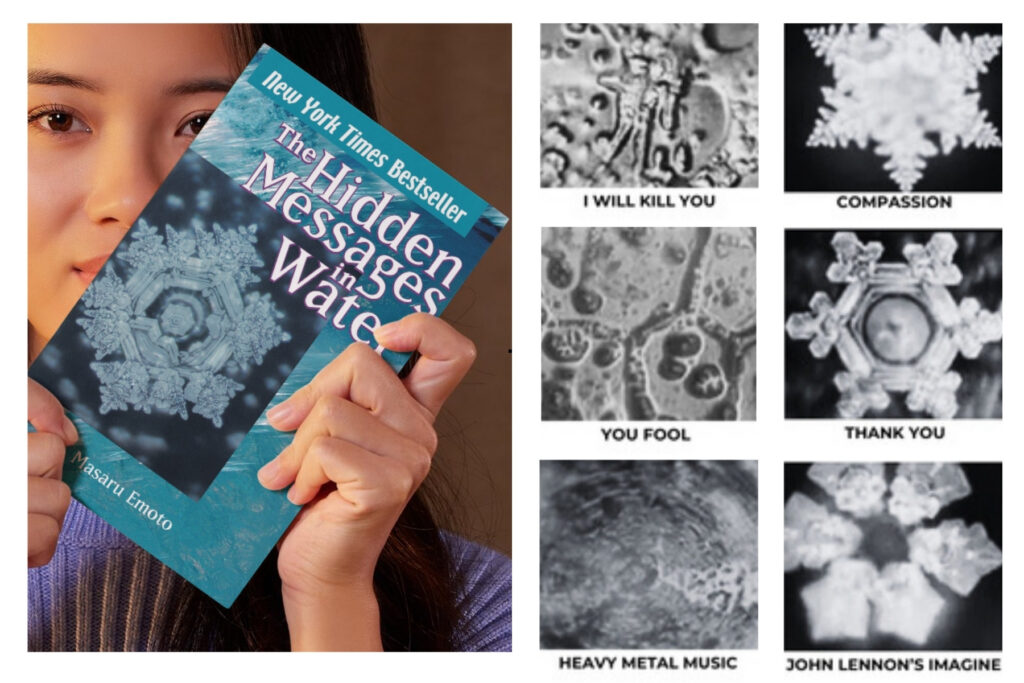
Western scientists have debated Emoto’s methods, but what isn’t debatable is that his work represents part of a larger scientific shift away from 17th century Newtonian classical mechanics where creation is confined to predictable laws of cause and effect.
In the 21st century, we are moving toward a quantum-informed paradigm that recognizes a metaphysical relationship between cognition, communication, and creation.
What we think and say does not simply describe reality, but helps shape it.
If we accept that the energy of thoughts and words can actually shape matter at the molecular level, it’s impossible to ignore the fact that our hearts and brains are more than eighty-five percent water. In other words, how we think and feel are fluid by design and the organs we use to send and receive communication are exquisitely responsive to frequency.
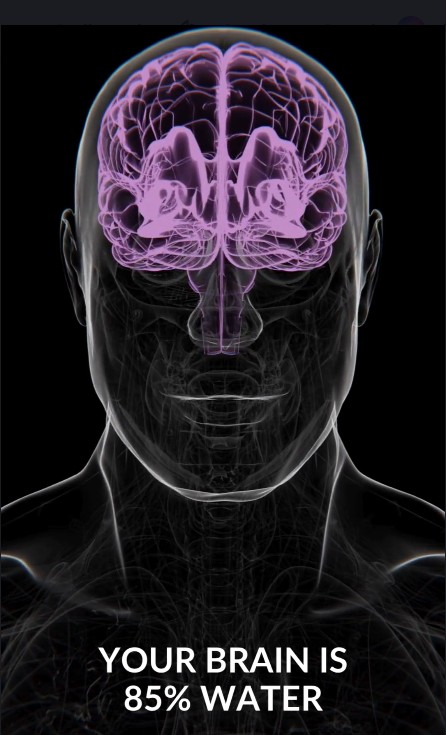
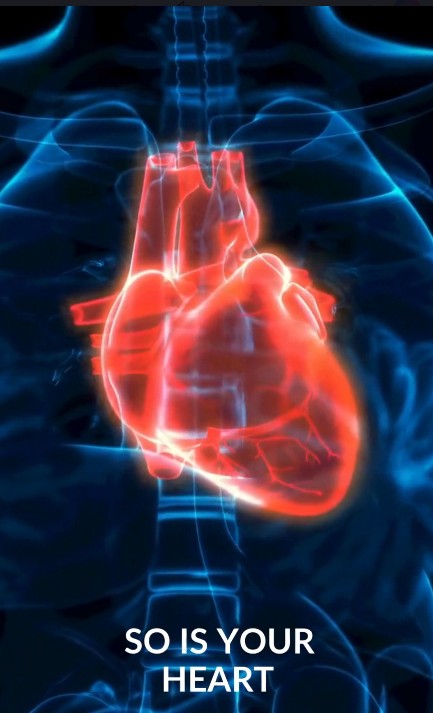
If intention and emotion change the molecular structure of water in a petri dish, imagine the effect within our hearts and minds, where language is absorbed and translated into chemistry, heartbeat, energy and creativity. Every word we speak, every emotion we dwell on, ripples through the internal ocean of the human body and then out into the world.
In this scientific paradigm we see that we are not just passive receivers of experience; we are conductors of vibration. When we speak or sing words of love, gratitude, or faith, the molecules within us literally reorder themselves to reflect health and harmony. And when we repeat words of fear or resentment, that molecular symphony distorts and destroys.
The connection between vibrational frequency and human biology becomes even more compelling in light of the work of Dr. Joe Dispenza, whose research into epigenetics shows how our thoughts and emotions can literally influence our DNA. His studies suggest that the body is constantly “listening” to the mind and that we can turn certain genes on or off in real time, altering the chemical instructions sent to our cells. Dispenza proposes that the mind doesn’t merely interpret reality; it engineers it.
These ideas about how we impact reality with our intention, thoughts and words is the new meeting place of science and spirit where ancient wisdom and modern research begin to sound like two notes of the same song.
This is from the Bahá’í writings, revealed in the mid-1800s:
“One word is like unto springtime causing the tender saplings of the rose-garden of knowledge to become verdant and flourishing, while another word is even as a deadly poison.”
When I first read that quote years ago, I understood it as a call to mindfulness in speech. But in light of 21st century quantum theories, I now see it as something even deeper — a reminder that our words don’t just vanish into the air after we speak them. They take root in the molecular, emotional, and spiritual fabric of the world. Whether we call it frequency, energy, or grace, the vibration of our language carries the power to wound or to heal, to divide or to unite, to destroy or to create.
“Every word is endowed with a spirit, therefore the speaker or expounder should carefully deliver his words at the appropriate time and place.”
If Emoto’s frozen crystals are beautified by speech, and if Dispenza is right that our biology is rearranged by our thoughts, then language isn’t just communication. It’s a powerful force of creation.
In trying to be more deliberate with this power, I ask myself: Does this word I am about to use build or break? Does it bring light or cast a shadow? If we accept that Our Words Create, then every sentence becomes an act of design. The more intentionally we wield our words, the more the world will begin to mirror our intentions.
Have you ever experienced the creative energy of a word — one that injured or healed something in you, or lingered long after it was spoken? I’d love to hear your story in the comments.


When I was a young child, four or five years old, my stepfather would play this word game with me:
“Kathie, you’re so pretty.”
I can still remember the feeling I had when he said it. Even though I knew what was coming next, a part of my little self believed for a moment that it might be true.
Then he would laugh and say… “Pretty ugly.”
💔