“For God’s sake, pay a singer instead of using AI.”
That comment was recently left on one of the songs on my YouTube channel. YouTube.com/@AllTheWordsORG
Most of the comments I receive are wonderful, but a few, like this one, I would characterize as “negative.” One or two comments I've gotten could even be described as bullying.
In the online communities where this AI music topic is discussed, there’s an assumption held by some Bahá’ís that Bahá’i-themed AI music is “soulless” and “unethical.”
They insinuate that anyone with a desire to make music must have access to talented singers, musicians, studios, engineers, arrangers, years of formal instruction and funding to create acceptable songs.
Some also believe that when artificial intelligence enters the creative process, heart and soul exit.
I can attest that neither of those things is true.

I am an African American Bahá’í who is using AI to create a kind of music that is not abundantly available for us yet.
There’s a handful of revered Bahá’í artists who have blessed us with contemporary, emotionally compelling, R&B and gospel worship songs with human musicians and vocals. If you are a Bahá’í, you likely know them all by name.
I'm not one of them. I do not sing in public. I do not play an instrument. I cannot read or write music.
I create songs using Suno AI Studio. The technology is my instrument.
More than 700 people have left comments on my songs. Just to tell me they have the songs on repeat. Or to say they are transported to another world while listening. Or they are brought to tears. Or their grandkids know the prayers and quotes by heart. An Uber driver has customers ask him to turn up the volume. Listeners describe praying, crying, healing, sleeping, waking, remembering God, and experiencing familiar prayers and tablets in an entirely new way.
One thing is clear—Many people have been hungry for this.
AI did not create that hunger, but tools like Suno AI Studio offer a way for more of us to help feed it.
Musical Opportunity Has Never Been Equitable
We love to speak as though talent alone creates musicians.
It does not.
Musical talent must be encouraged, instructed, practiced, financed, equipped and, hopefully, introduced to an audience.
Almost every accomplished musician I personally know had access to at least one crucial advantage on their path to excellence. Some grew up in churches where they could sing, play instruments and perform. Others came from musically gifted families. Others had parents who could afford instruments, private lessons, transportation, rehearsal space and studio time. Some grew up with studios in their homes.
Millions of musically gifted or musically inclined children will never receive these advantages.
I am an example of this.
Raised by a single mother on monthly welfare payments and food stamps, there were no resources to provide me with musical training beyond a few piano lessons my father paid for when I was six years old.
I have always felt there was an untapped musical ability in me, but the path to writing was just too clearly paved for me—literally—that paved sidewalk to the local library where I found my passion for (free) books.
‘Abdu’l-Bahá urges us:
“It is incumbent upon each child to know something of music.”
In California, Prop 13 gutted K-12 public school music programs, meaning parents had to pay out of pocket for private lessons. It feels unjust to deny generations of children meaningful musical education, and then accuse them of cheating when technology finally arrives to give them a bridge across that opportunity gap—a real chance to express the music they have within them.
I do believe that there are barriers—limited access to musical nurturing and education— that matter profoundly in any discussion about who deserves to make Bahá’í-themed music.
The question of access and equity is central to this discussion, in my mind, but I have never heard it mentioned once in the many online conversations I’ve witnessed that vilify, and even demonize, AI-produced worship music.
For me, the negative pushback feels like the early opposition of some community members to the Bahá’í Youth Workshop and its use of secular music to serve God. It’s not the same of course, but that spirit of gatekeeping has the same teeth.
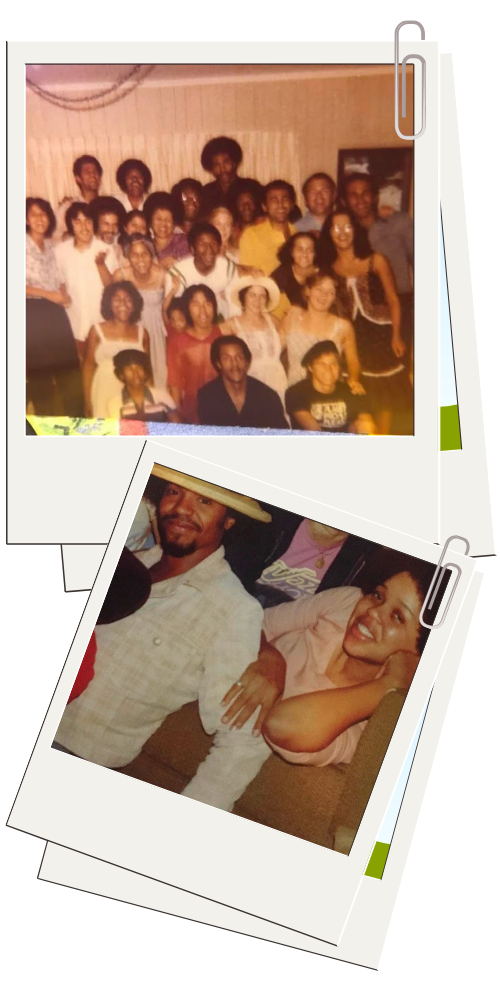
For those of us youth who could not afford Bahá’í camp tuition or flights to serve abroad, Workshop was our immersion in the Writings and an opportunity to build community, teach and serve God.
Despite the negative light some tried to cast upon Oscar and Freddie DeGruy and their methods, these two devoted Bahá’ís exposed us Workshop members to such an amazing diversity of music over the years. Secular and Bahá’í-themed music were incorporated into our praying, our deepening in the Writings, our communion with Spirit, and in our service to humanity.
Zoom. Good Times. Makes Me Wanna Holler. What's Going On? One Planet One People Please. If you know, you know.
For this, I am eternally grateful to them.
So, how in the heck is the Bahá’í Youth Workshop related to this question of AI music?
To me, no conversation about this topic is complete without recognizing that underserved, and excluded populations have historically reached beyond the “acceptable” to express creativity.
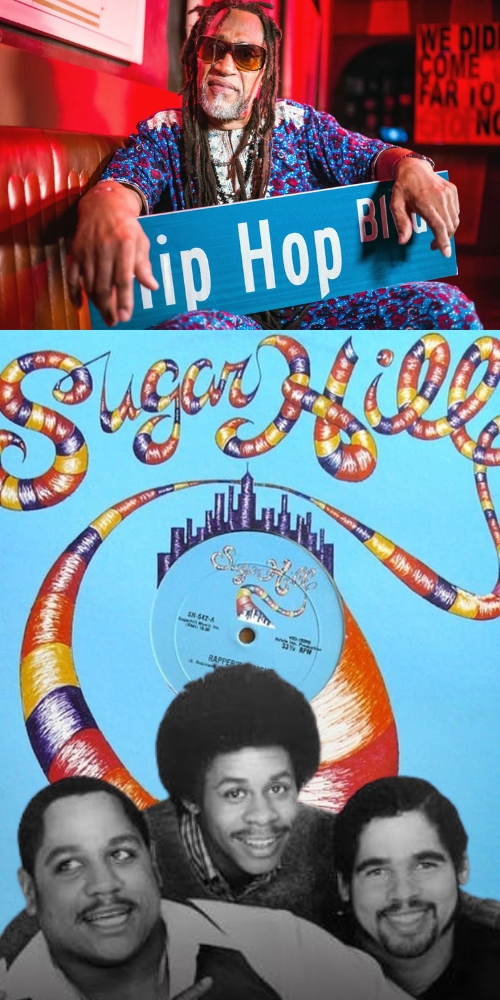
Back in the early 70’s in the Bronx, young Black and Latino DJs, MCs and poets did not wait for instruments, classes, conservatories, orchestras or expensive recording studios.
A turntable became an instrument. The sound of a needle dragged across vinyl. Existing recordings became raw material to be sampled, rearranged and transformed into something new. What people might dismiss as “stealing” or “manipulation” of other people’s music became one of the most inventive and influential (and hijacked) creative movements in modern history.
That history matters.
When people of any background or ethnicity who have been locked out of the expensive rooms of music production finally find another entrance, do we welcome their creativity—or condemn them for the door they walked through?
Much of the music I’m creating with Suno draws from soul, R&B and gospel traditions which are profoundly shaped by Black musical genius. My Bahá’í-themed songs are attracting the hearts and souls of listeners who crave a soulful musical connection to the Word of God, and who, in my opinion, have been underserved.
The truth is, fair access and equity to "becoming talented" isn't just about who gets to create the music. It is also about whether people can find themselves—culturally and spiritually—within the body of music offered to them.
Cultural familiarity matters. Rhythm, phrasing and a soulful texture can help the Sacred Words feel more intimate and more immediately understandable.
I am eager to see what the future holds in this regard, and rather than fearing or hating the technology, I’ll be holding space for a new generation of creators and the incredible diversity of expression that awaits.
Technology Does Not Determine What's Soulful
Suno is amazing, but it does not work alone.
It does not select the words, or know why that prayer or passage matters to my heart and soul.
It will never notice my attitude of prayer, meditation and space-holding for intuition and Divine intervention.
It does not decide which attempted composition feels reverent, which vocal interpretation feels emotionally true, which pronunciation is distracting, which arrangement overwhelms the Words, or which result should never be released.
I make those decisions.
I listen, reject, redirect, regenerate, edit, remaster, sequence, title, illustrate and present the work. The software generates sounds. It does not generate my loving intention to serve God by serving my human family.
Why Was the Drummer's Soul Negotiable?
I do find a glaring hypocrisy in much of the hostility directed at AI.
For decades, the music industry has used synthesizers, drum machines, sequencers, samples, loops, digital workstations and computer software.
In other words, human musicians began disappearing from the recording process long ago.
These days, a vocalist performs over digitally programmed music. A producer creates orchestral textures without hiring an orchestra. Drums, bass lines, piano parts, percussion, strings and entire instrumental arrangements are easily synthesized, sampled, corrected, repeated and digitally perfected.
It has become so normal, we stopped thinking of it as artificial.
But now that technology can synthesize a singing voice, we’ve suddenly discovered a sacred moral boundary. The same culture that accepted software in place of a musician is declaring that using software in place of a vocalist removes the “human soul.”
Why was the drummer’s humanity replaceable?
Why were the pianist and bass players' humanity replaceable?
The voice is an extraordinary instrument. It is intimate, embodied and capable of expressing profound emotion. But a piano can also express grief. A cello can ache. A bass can create longing. A drum can awaken courage. Every instrument can become a means through which the emotions of the human heart are communicated.
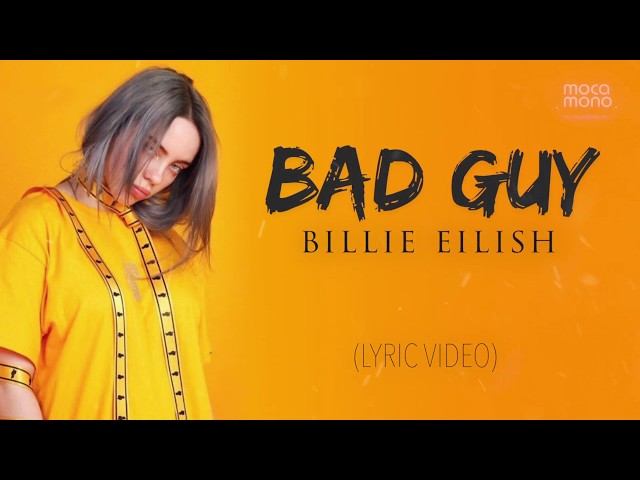
Billie Eilish's 2020 Song of the Year Grammy winner "Bad Guy" was entirely produced on a computer by Finneas O'Connell rather than using traditional live studio musicians.
The instrumental track relies on software synthesizers, programmed virtual drums, and found sounds like an Australian pedestrian crosswalk.
Billie's vocals are not auto-tuned to fix pitch, but they are heavily processed and digitally manipulated for artistic effect .
-Sound On Sound
Art is Not the Prescription For a World Facing Catastrophe
Art can be beautiful, consoling, awakening, and spiritual. Music can soften the heart, stir emotion and make a soul more receptive. But art—whether created with a human voice, a turntable, a synthesizer or AI—is not the power that can regenerate mankind. No matter how extraordinary, no human singer can confer spiritual power upon the Word of God, and no AI-generated voice can strip that power away. The transforming force belongs to the Divine Word itself.
Bahá’u’lláh states unequivocally:
“The Word of God, alone, can claim the distinction of being endowed with the capacity required for so great and far-reaching a change.”
‘Abdu’l-Bahá likewise writes:
“Naught but the celestial potency of the Word of God, which rules and transcends the realities of all things, is capable of harmonizing the divergent thoughts, sentiments, ideas, and convictions of the children of men.”
I am not claiming that a song will cure the world. The music is not the medicine. The Divine Word is the medicine. Music is a vessel that can help a soul receive the prescription—helping the healing Words enter the heart, remain in the memory and accompany a person through grief, prayer, fear or hope.
In my approach to this discussion I’m choosing to center hearts that are seeking God.
In the words of Bahá'u'lláh:
What ‘oppression’ is more grievous than that a soul seeking the truth, and wishing to attain unto the knowledge of God, should know not where to go for it and from whom to seek it?"
I pray that even one of the songs on my channel can help to pave a way for those hearts seeking their Creator.
However, if we insist on centering artists, and their “rights.” I would love to hear an explanation for prioritizing that approach.
Sincerity is Not the Same as Excellence
No discussion about Bahá’í-themed music is complete without mentioning the volume and the quality of what is available to us hungry listeners.
There is a plethora of songs that have clearly been offered with abundant love. The sincerity is real. The devotion is real. The desire to serve is real.
Sincerity and excellence are not the same thing.
Not every person who is passionate about singing has developed the pitch control, tone, diction, breath support, interpretive ability or recording skill to produce pleasing music.

Singing for joy, prayer, community and personal devotion does not require professional ability. Publicly distributing a recording for repeated listening, however, raises another question: Will this performance help the listener connect intimately to the Sacred Word, or will it distract or reflect poorly?
‘Abdu’l-Bahá did not mince words on this topic. He urged that children be taught to sing “with excellence and effect.” He also spoke candidly about the relationship between melody and voice:
“A faulty voice, even though the music be good, is unpleasing.”
He compared melody to pure water and the voice to the vessel from which that water is offered. If the vessel is unsuitable, even pure water can become difficult to receive.
These passages should never be weaponized to humiliate imperfect singers. But neither should we pretend that technical quality is spiritually meaningless.
AI Ethical Concerns Deserve a Real Conversation
There are legitimate ethical questions surrounding generative AI.
Artists have concerns about consent, training data, compensation, unauthorized imitation and the cloning of identifiable voices. Musicians are understandably worried about livelihoods in an industry that has exploited them even before AI appeared. Technology companies must be questioned, regulated and held accountable where possible.
Those concerns deserve serious discussion.
But “AI raises ethical questions” does not mean “every person using AI to make sacred music is unethical.”
Creating an unauthorized imitation of a living artist is not the same act as generating a nonspecific vocal performance. Deceiving listeners is not the same as openly announcing the music is AI produced. Mass-producing disposable content for money is not the same as carefully developing music intended to help people pray, heal and encounter the Divine Word.
The conversation around environmental impact deserves it own spotlight
I recently asked ChatGPT:
"I need you to be extremely thorough in your research and candid in your answer. I need a comparison of energy used to produce a 1 liter plastic bottle of Almond milk vs. energy used to generate a 5 minute song on Suno."
I won't paste the voluminous response here, but the conclusion was:
"Best study-supported almond-milk number: One liter of unsweetened almond milk in a virgin-PET bottle ---> approximately 10.4 MJ of total primary energy.
Best estimate for Suno ---> One five-minute Suno output: probably 5–30 Wh of data-center electricity converted - Approximately 0.05–0.30 MJ
Comparison ---> The one-liter PET bottle probably uses approximately 35–200 times as much energy as one five-minute Suno output.
Conclusion: One bottle of almond milk ≈ 70 five-minute Suno outputs."

Ye Shall Know the Tree By Its Fruit
High view counts on a video does not prove that something is spiritually worthy.
But the effect of music on people is relevant.
I do not have to theorize about the effect my songs are having.
Listeners describe it in their own words:
Listeners tell me repeatedly that these songs have helped them memorize prayers. They play them while grieving, sleeping, driving, meditating and preparing for difficult moments. Some encounter Bahá’í Scripture for the first time through a song. Others have known the Words for decades but the melody has allowed those Words to reach them differently.
‘Abdu’l-Bahá explained that music can awaken and intensify what is already within the heart. That is what I see happening.
Suno does not have a soul. Neither does a piano. Neither does a microphone, a mixing board, a synthesizer, a drum machine or a recording studio.
The soul belongs to the person who approaches the work with intention. It belongs to the musician, producer, writer, listener and worshipper.
It is present in the longing to be of service to God and humanity.
It is present in the discernment that searches for the right musical expression, and in the human heart that receives the result.
I do not expect everyone to enjoy AI-assisted music.
I am not asking anyone to abandon human singers, instrumentalists, choirs or traditional chanting. There is room—and need—for all of them. Maybe even more now than before.
I would be beyond ecstatic if an artist covered any and every song on my channel!
I am asking people not to mistake their preferences for doctrine.
I am asking not to be bullied with hurtful names like “disgusting” and “pitiful.”
I am asking people to consider who has historically been allowed to make “professional” music, and who has been excluded.
I am asking why a tool that synthesizes an orchestra is embraced, but it is demonized when it synthesizes a voice.
Most of all, I am asking people to judge this work by meaningful standards:
Were the Sacred Words accurately presented?
Were they treated with dignity and reverence?
Was care taken to create something beautiful?
Ultimately, I am laser-focused on this quote from the Bab:
0 Comments